InertSustain PFPA pentafluorophenyl-modified column designed for enhanced separation of structurally similar compounds through multiple retention mechanisms, including π-π, dipole, and hydrogen bonding interactions.
InertSustain PhenylA directly bonded phenyl group gives the InertSustain Phenyl column unique reversed-phase selectivity, ideal for separating polar compounds and structural isomers via π-π and hydrogen bonding interactions.
InertSustain PhenylhexylA phenylhexyl-bonded column that offers complementary selectivity to traditional alkyl-chain columns, providing high inertness, reproducibility, and low back pressure.
LD249 Gas Leak DetectorCompact, easy-to-use leak detector with thermal conductivity sensor for fast, accurate gas detection. Replaces the LD239.
FM4: Air Sampler for PFASLow-volume air sampler for PFAS enabling comprehensive analysis of both gas and particle phases in a single sampling using stage-optimized materials.
Intelligent Pump UI-32 Series Next-generation dual-plunger HPLC pump with ultra-low pulsation and automated pressure control for flow chemistry.
OralChroma Halitosis Measuring DeviceHigh-precision breath analyzer using gas chromatography to quantify VSCs in 4 minutes — fast, reliable, and maintenance-free.
Intelligent Pump UI-32 Series Next-generation dual-plunger HPLC pump with ultra-low pulsation and automated pressure control for flow chemistry.
Intelligent Micro Pump MP-32 SeriesCompact micro pump with ultra-low pulsation and high-pressure stability, ideal for flow chemistry and precision dosing.
Auto BPR BP-11 Auto Back Pressure Regulator for the UI-22 Series, maintaining stable pressure for consistent flow.
PCS Pump SP-32 SeriesSingle plunger pump with real-time pressure control and low-pulsation flow—ideal for precise fluid delivery.
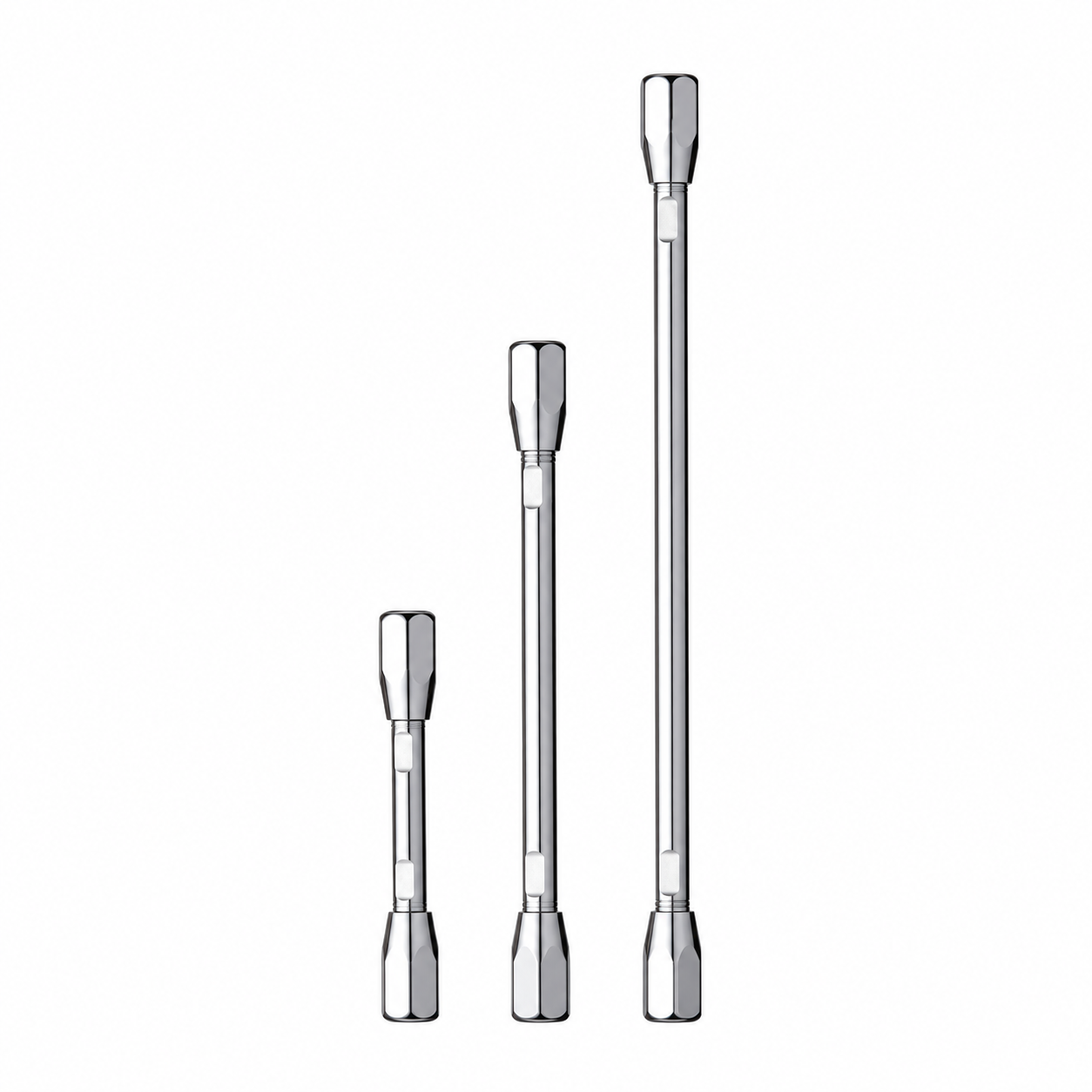
InertCore PFP combines the high efficiency of core-shell particle technology with the unique selectivity of a pentafluorophenyl fixed phase. This column is designed for fast, high-resolution separations and is particularly effective for compounds that are difficult to resolve on standard C18 columns.
Certificate of Analysis included with every analytical column
Get Expert Advice or a Fast Quote
GL Sciences: Trusted by Scientists Since 1968
About InertCore PFP
Overview
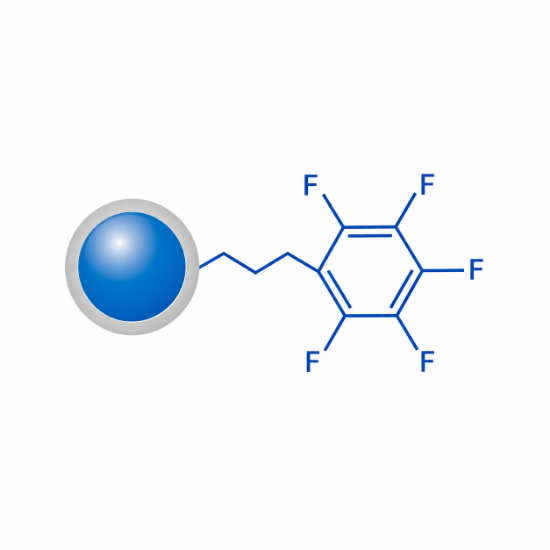
InertCore PFP combines the high efficiency of core-shell particle technology with the unique selectivity of a pentafluorophenyl fixed phase. This column is designed for fast, high-resolution separations and is particularly effective for compounds that are difficult to resolve on standard C18 columns. The PFP phase provides multiple interaction mechanisms, including π-π interaction, dipole interaction, and shape selectivity, enabling improved separation of aromatic compounds, halogenated compounds, positional isomers, and structurally similar analytes. InertCore PFP is an excellent choice for laboratories seeking sharper peaks, faster analysis, and alternative selectivity for complex samples in pharmaceutical, environmental, food, and chemical applications.
How the PFP phase works
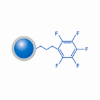
PFP combines several retention mechanisms. The balance of interactions changes retention and elution order.
Phase feature
Interaction / contribution
Fluorinated aromatic ring
Dipole interactions, π–π interactions and hydrogen bonding
Aromatic ligand geometry
Sensitivity to molecular shape and substituent position
Propyl group
Hydrophobic retention
Endcapping
Limits silanol-related contributions to basic-analyte retention
Selectivity depends on the compound pair and the mobile phase.
Application examples
Six separations run on InertCore PFP. Open one to see the chromatogram, the peaks and the conditions.
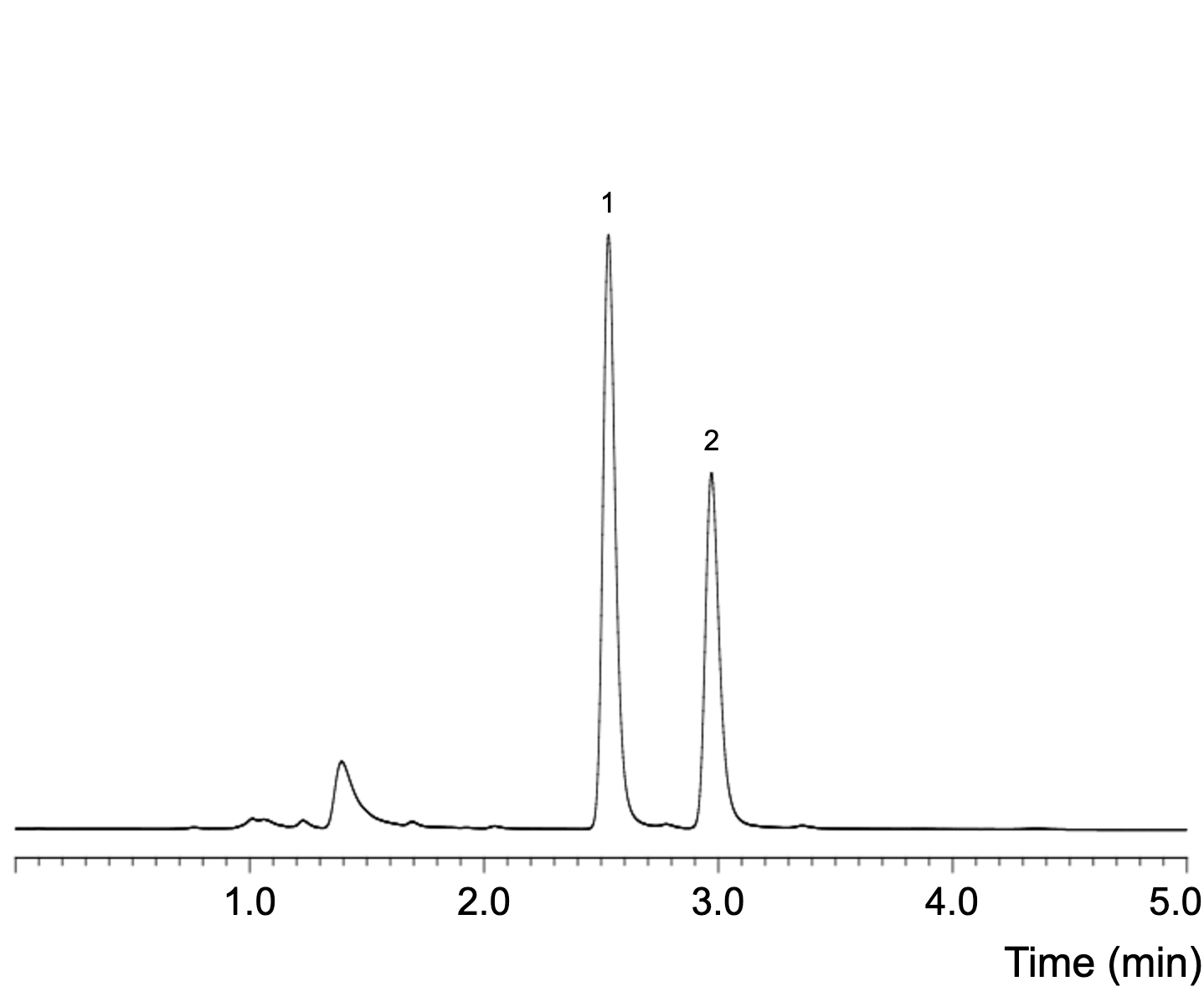
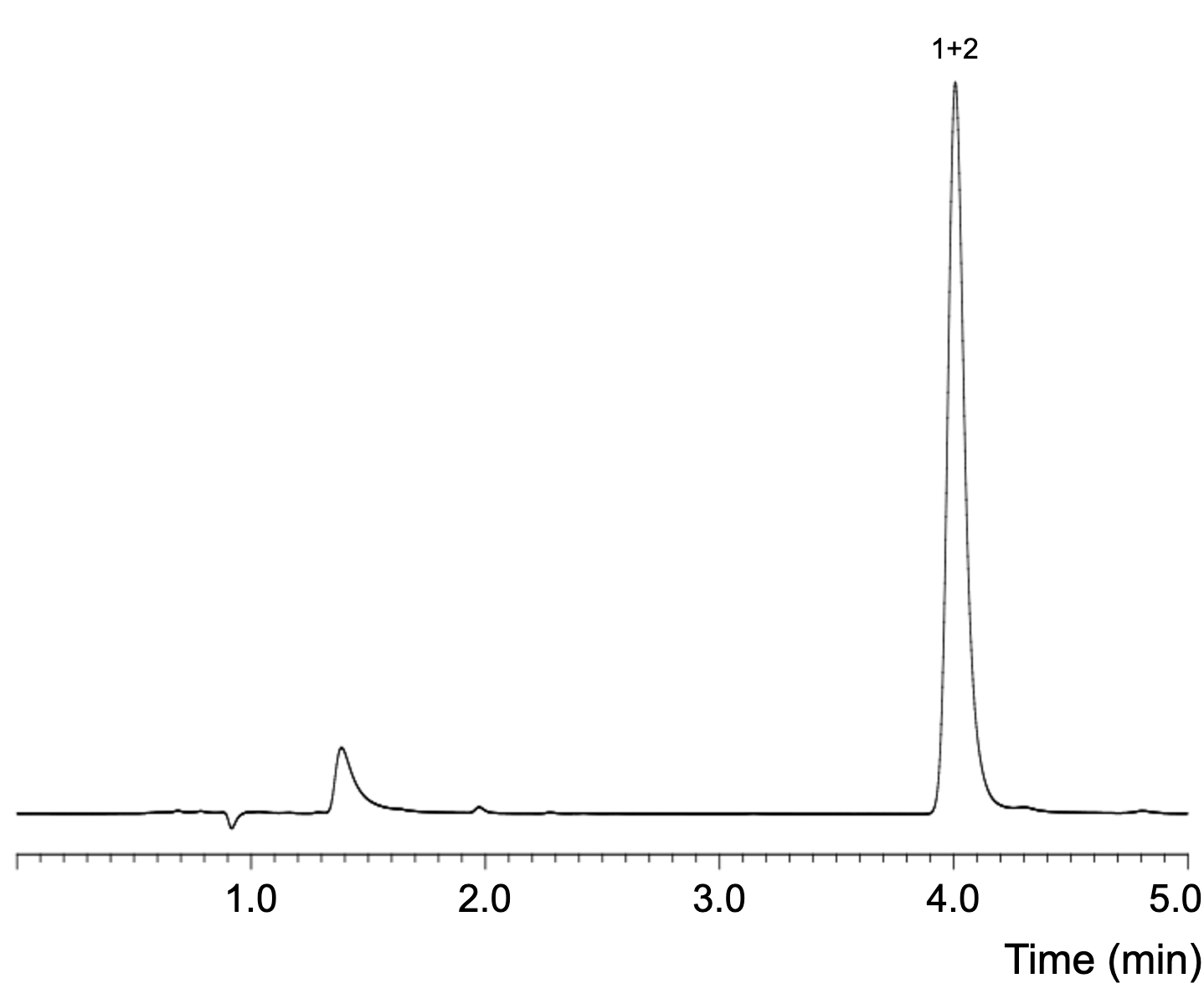
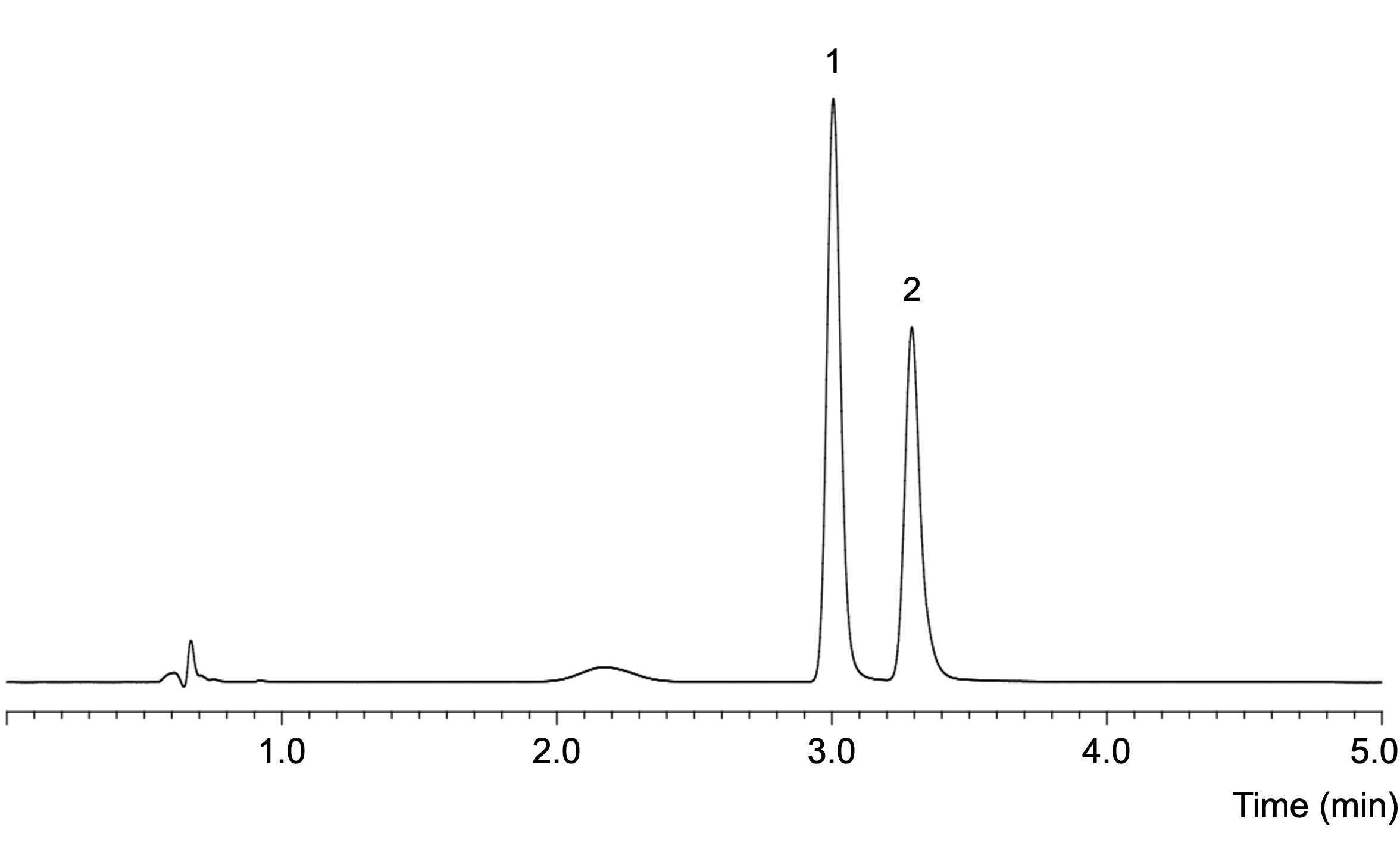
cis- and trans-Stilbene
Geometric isomers · compared with InertCore Plus C18
+
A geometry-sensitive pair that coelutes on InertCore Plus C18 in this test.
InertCore PFP — α2/1 = 1.29
InertCore Plus C18 — α2/1 = 1.00
1. cis-Stilbene2. trans-Stilbene
2.6 µm, 2.1 × 100 mm. MeOH / water 80 / 20, 0.2 mL/min, 40 °C, UV 210 nm. α2/1 = k2/k1.
InertCore PFP has high cis/trans separation capability.
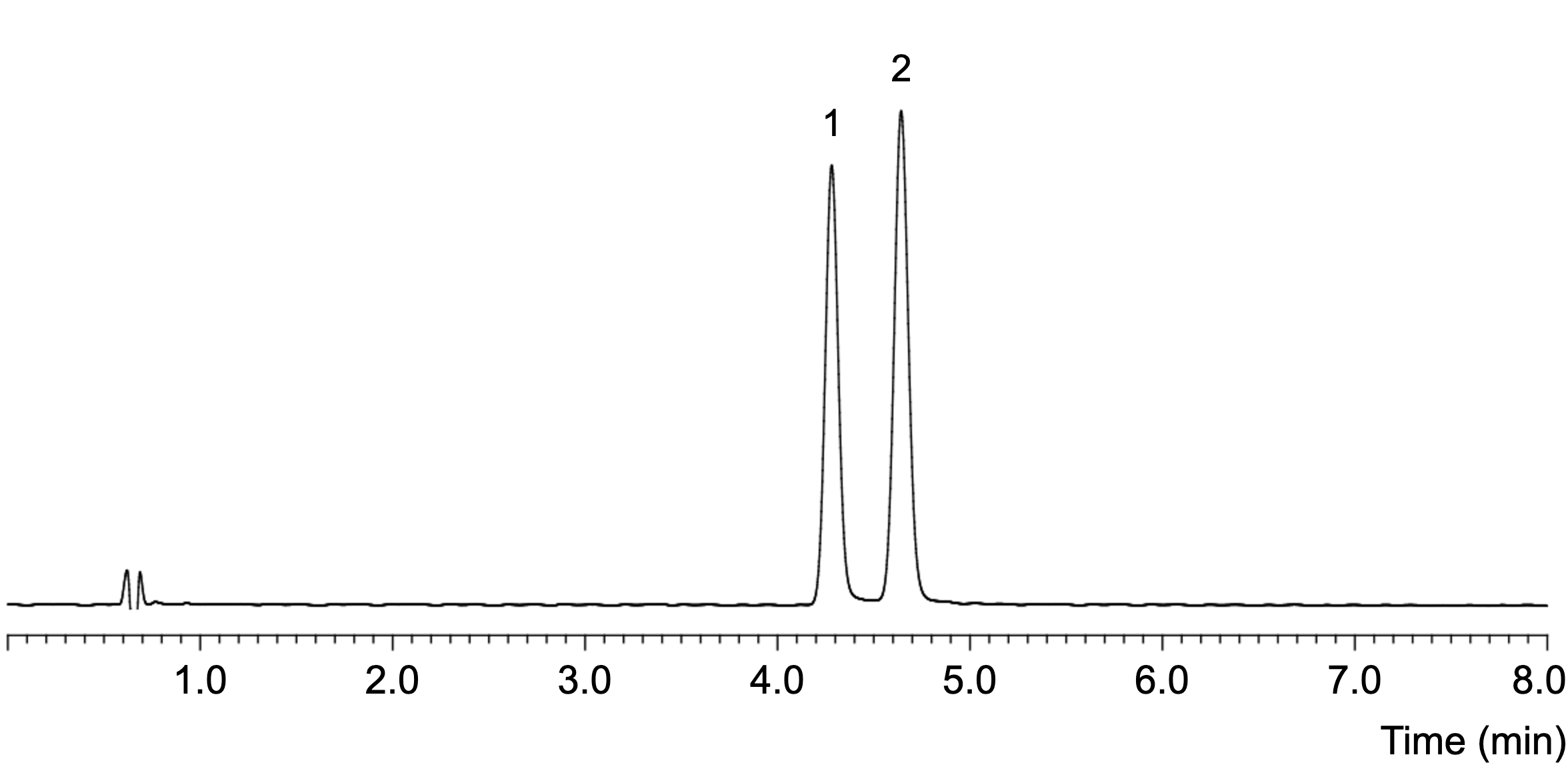
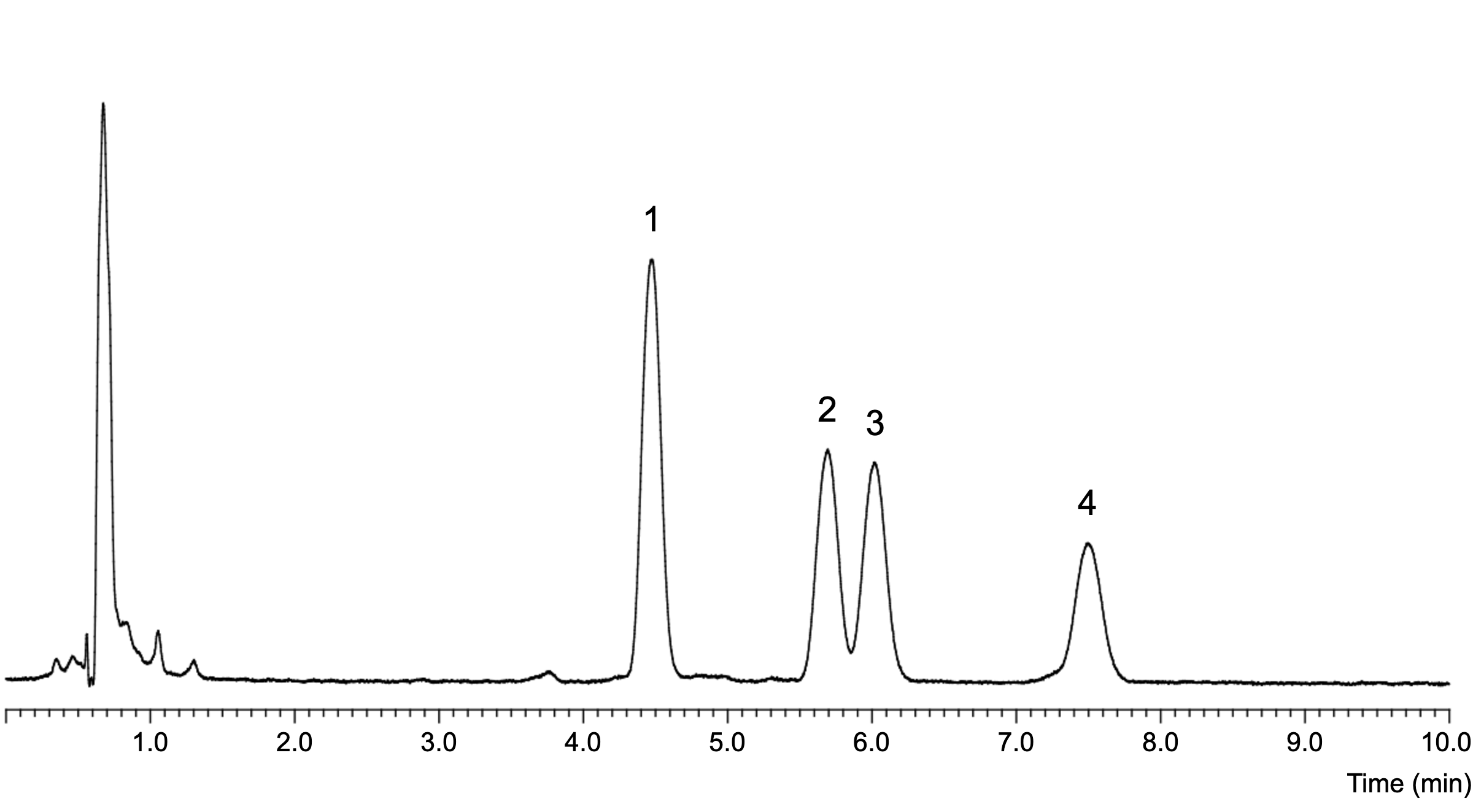
Citral
Geometric isomers · fragrance
+
1. Neral (cis)2. Geranial (trans)
2.6 µm, 2.1 × 100 mm. 0.1% formic acid in water / ACN 65 / 35, 0.3 mL/min, 40 °C, UV 240 nm.
Thymol and Carvacrol
Positional isomers · fragrance
+
1. Thymol2. Carvacrol
2.6 µm, 2.1 × 100 mm. 0.1% formic acid in water / ACN 65 / 35, 0.3 mL/min, 40 °C, UV 275 nm.
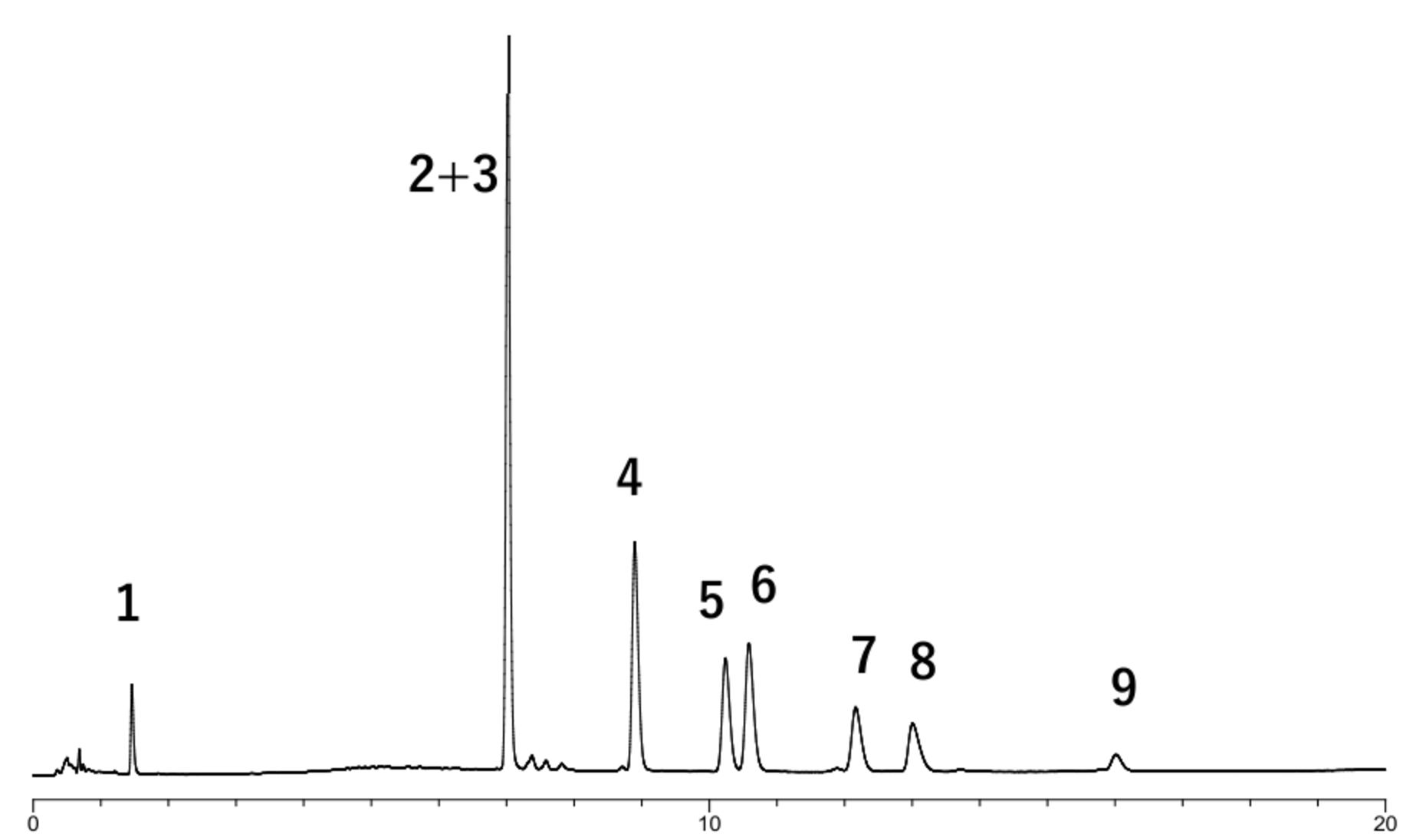
Tocopherol isomers
Fat-soluble vitamins
+
InertCore PFP is useful for the analysis of fat-soluble vitamins, which are difficult to separate on C18 columns.
2.6 µm, 2.1 × 150 mm. MeOH / water 85 / 15, 0.3 mL/min, 40 °C, UV 290 nm. 100 mg/L each, 2 µL injection. The source does not report a numerical resolution (Rs) value.
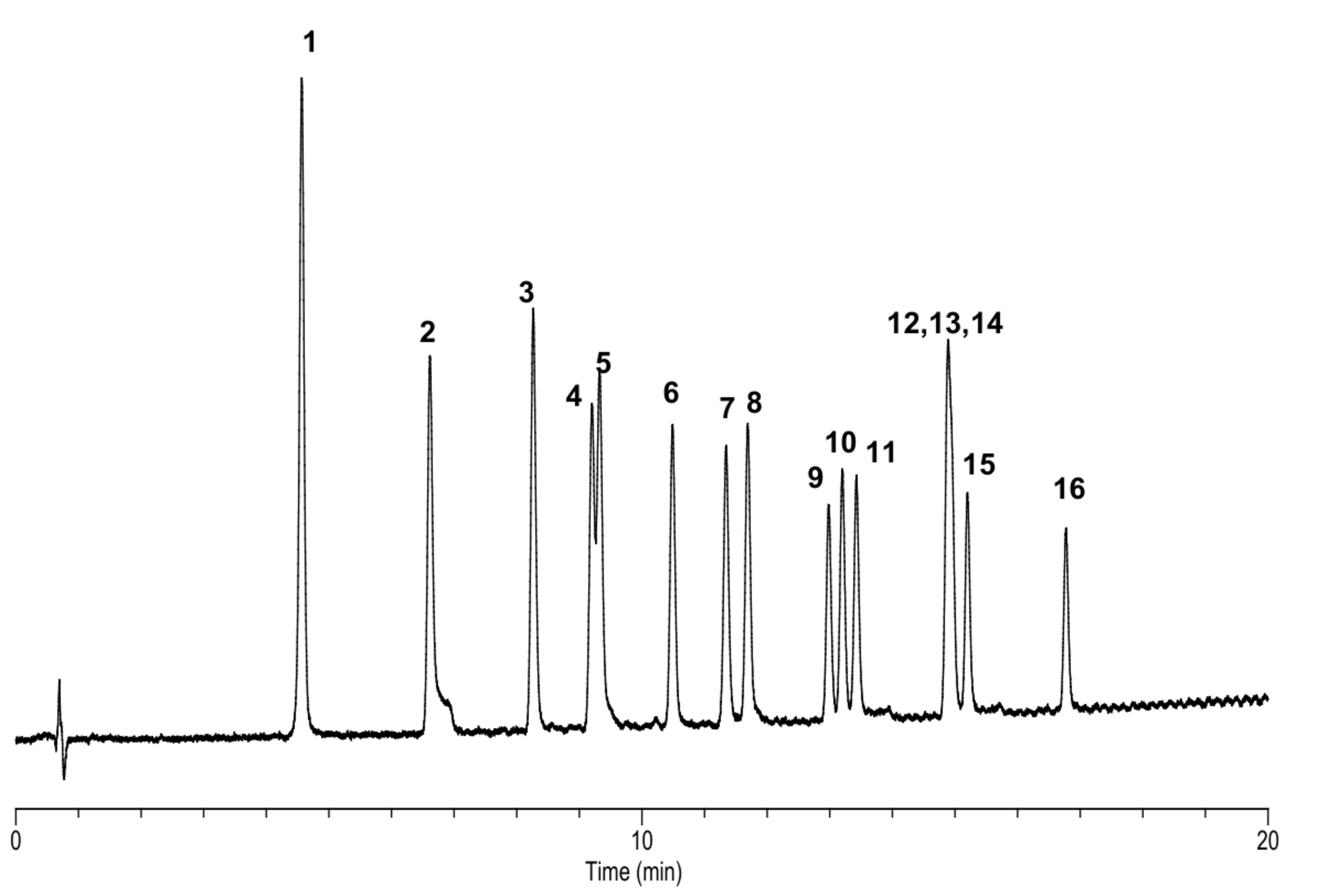
DNPH derivatives
16 compounds in one run
+
Useful for simultaneous analysis of multiple aldehydes.
Three tests, each run on all four InertCore phases.
Test
InertCore C8
InertCore Plus C18
InertCore Biphenyl
InertCore PFP
Planar recognition, α7/5
1.00
1.16
1.28
2.47
Hydrophobic retention, k6 (amylbenzene)
2.39
5.16
2.49
1.89
Terphenyl positional isomers, α3/1
1.16
1.38
1.38
1.66
Nitro-substituted selectivity, α6/5
1.04
1.00
1.06
1.26
Planar recognition, hydrophobic retention and terphenyl positional isomers: 2.6 µm, 2.1 mm I.D. × 100 mm; methanol / water 80 / 20, 0.2 mL/min, 40 °C, UV 254 nm. Nitro-substituted selectivity: 0.1% phosphoric acid in water / acetonitrile 75 / 25, 0.2 mL/min, 40 °C, UV 280 nm; the source does not state the column dimensions for this test. Each test uses its own set of compounds.
InertCore PFP has slightly lower hydrophobic retention than C8, but offers equal or higher selectivity than Biphenyl.
Unlike phenyl-based columns, including Biphenyl, InertCore PFP does not necessarily show stronger retention for compounds with more benzene rings.
InertCore PFP provides better separation of o- and m-isomers than C18.
The stronger electron-withdrawing effect enhances the retention of nitro-substituted compounds.
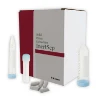 InertSep QuEChERS Kit High-purity extraction and cleanup kit for pesticide residue analysis in food and environmental samples.
 LD249 Gas Leak Detector Compact, easy-to-use leak detector with thermal conductivity sensor for fast, accurate gas detection. Replaces the LD239.
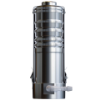 FM4: Air Sampler for PFAS Low-volume air sampler for PFAS enabling comprehensive analysis of both gas and particle phases in a single sampling using stage-optimized materials.
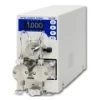 Intelligent Pump UI-32 Series Next-generation dual-plunger HPLC pump with ultra-low pulsation and automated pressure control for flow chemistry.
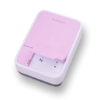 OralChroma Halitosis Measuring Device High-precision breath analyzer using gas chromatography to quantify VSCs in 4 minutes — fast, reliable, and maintenance-free.
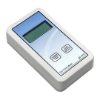 GF1010 Digital Gas Flowmeter Portable, volumetric meter for accurate GC gas flow measurement without gas selection.
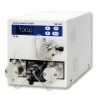 Intelligent Micro Pump MP-32 Series Compact micro pump with ultra-low pulsation and high-pressure stability, ideal for flow chemistry and precision dosing.
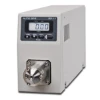 Auto BPR BP-11 Auto Back Pressure Regulator for the UI-22 Series, maintaining stable pressure for consistent flow.
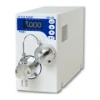 PCS Pump SP-32 Series Single plunger pump with real-time pressure control and low-pulsation flow—ideal for precise fluid delivery.
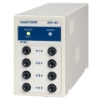 Gastorr AG Series Reliable, CPU-controlled degassing system for low-flow applications with independent chamber design.
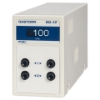 Gastorr BG Series High-performance degassing system with real-time vacuum display and independent chamber design.
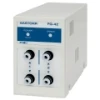 Gastorr FG-42 Solvent degassing system optimized for fluorinated solvents with real-time vacuum display.
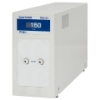 Gastorr PG Series High-flow degassing system for fractionating applications with real-time vacuum display.